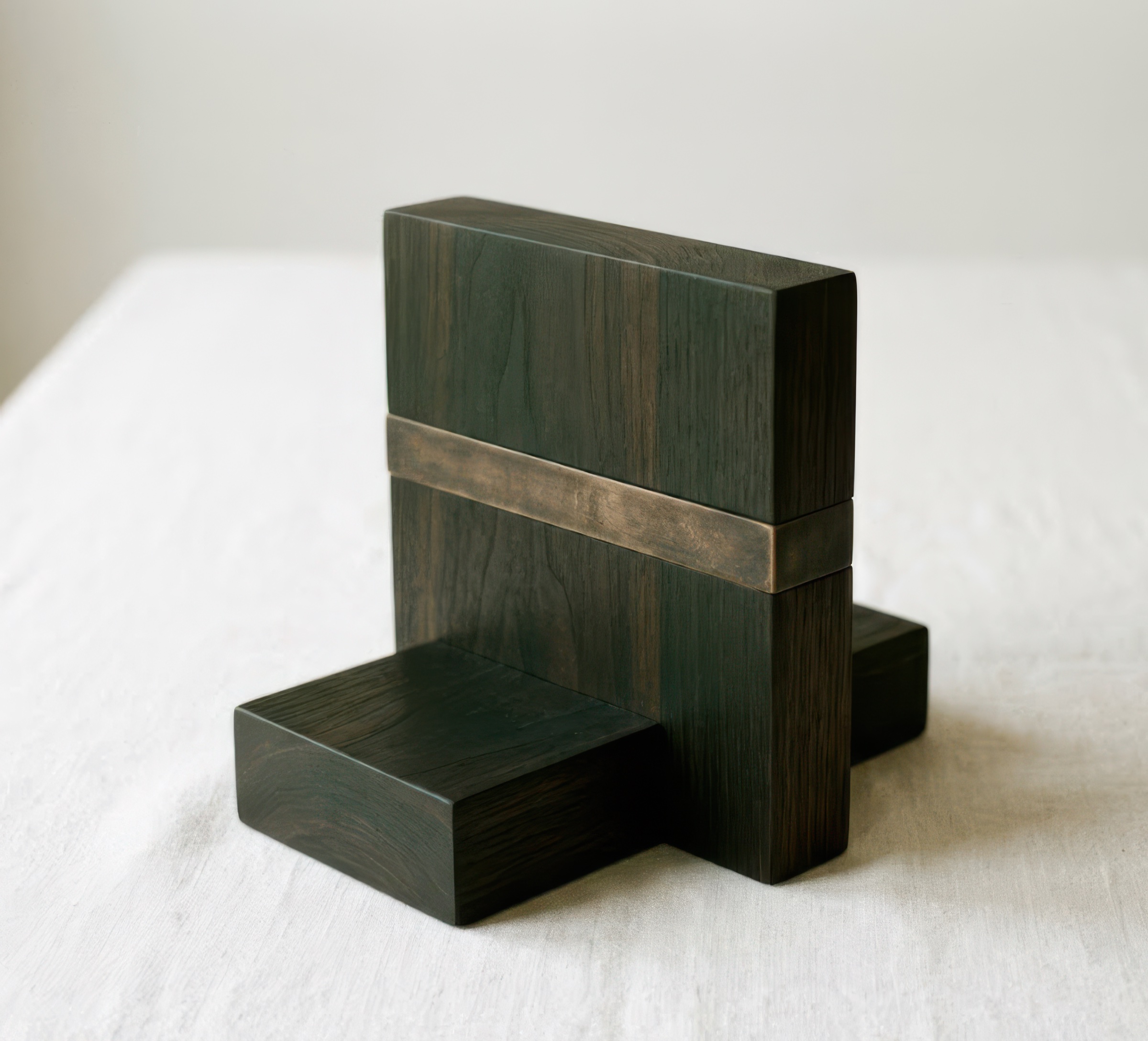
Not a portrait. A proposition.
Testa is not a reproduction and not a symbol. It is a form that asks to be read as form: the weight of a head rendered in material, stripped of identity, resolved into object.
The silhouette is architectural. The surface is dark-stained hardwood, oiled to a matte finish that absorbs rather than reflects light. The grain runs through the form as a reminder that the material preceded the idea. A band of hand-finished bronze wraps at the base: not ornamental, but structural in the visual sense, an anchor that keeps the form from floating.
Testa is made to be placed. On a shelf, on a surface, in a corner where the light falls in the afternoon. It does not require a pedestal. It requires attention.
There is nothing to understand about it that is not already visible.